Colonizer's Game, 2025
Animation & Workshop Series
Animation, Workshop, Motion Capture, Unreal Engine 5.4, Blender, Perception Neuron Studio, Plask.AI
Colonizer's Game animation was developed as part of Collective Witnessing: Movement Workshop of The Colonizer’s Game, a three-day movement workshop focused on collective witnessing, embodiment, and decolonial storytelling. The project explored how participants could be moved beyond passive observation and actively reinscribe their perspectives into a narrative through movement, performance capture, and virtual production. At the center of the workshop was a story conceived and narrated by philosopher and professor Bayo Akomolafe. The narrative follows a community escaping the bounds of colonization, only to discover that survival requires adopting many of the methods and structures of their oppressors. The story examines the paradoxes of resistance, adaptation, and cultural survival.
The narrative was realized as an animated short film that participants first viewed and then responded to through movement and choreography. These embodied responses were captured through motion capture technology and reintroduced into the evolving story, transforming viewing from a passive act into a participatory process.
The animation was designed for an ultra-wide, immersive presentation. Composition and cinematography position viewers within the world rather than distant observers. The story is communicated primarily through narration and visual metaphor, using contrasts between warm and cool color palettes, light and darkness, stillness and movement, scale, and shifting weather conditions that move between calm and chaos. Together, these relationships establish the emotional and thematic structure of the piece.
Role: Art Director, Unreal Engine Developer & Motion Capture
Organization: Cornell University & OCAD University
Technology: Unreal Engine 5.4, Blender, Perception Neuron Studio, Plask.AI
Team: Kat Estacio, Renata Marques Leitão, Immony Men, Jasmine Liaw, Jonathan Silveira








Visual Direction & Storyboard
The project favors a surrealist and impressionistic visual language over photorealism. Rather than depicting conflict literally, the visual design focuses on emotional and psychological states, allowing atmosphere and symbolism to carry the narrative weight.
This aesthetic was achieved through a combination of Unreal Engine systems and custom techniques, including lighting design, atmospheric fog, Niagara particle systems, Chaos Cloth simulations, dynamic foliage, custom materials, motion capture, and stylized environment and character modeling. Cinematic depth of field, bokeh, and controlled camera language were used to direct attention, manipulate perceived scale, and reinforce emotional tone.
These systems were integrated directly into the storytelling process. Environmental motion, weather, lighting, camera, environment design, and atmosphere were orchestrated to support cinematography and communicate narrative themes visually, allowing the emotional experience of the story to emerge through the visual language.

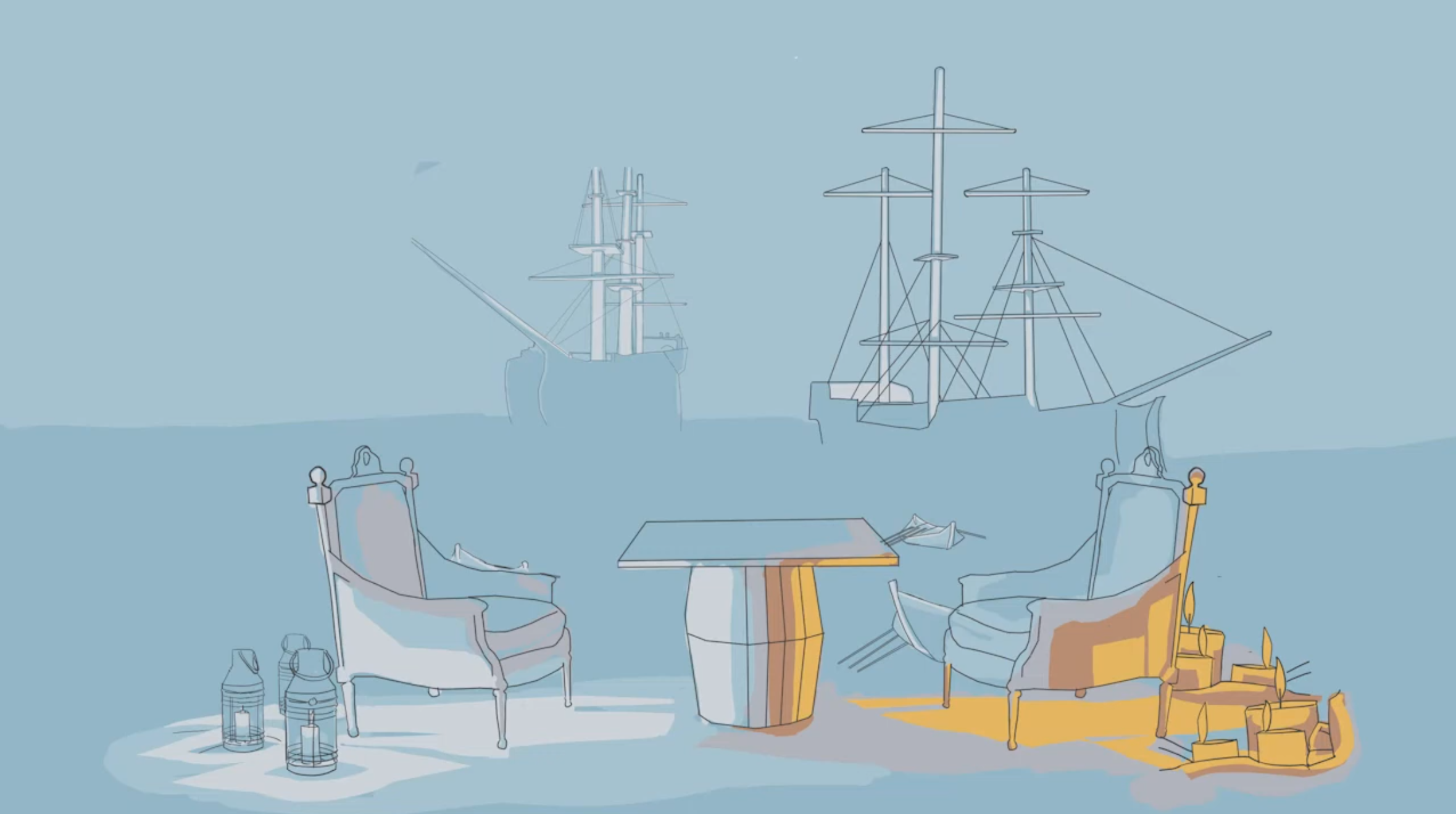


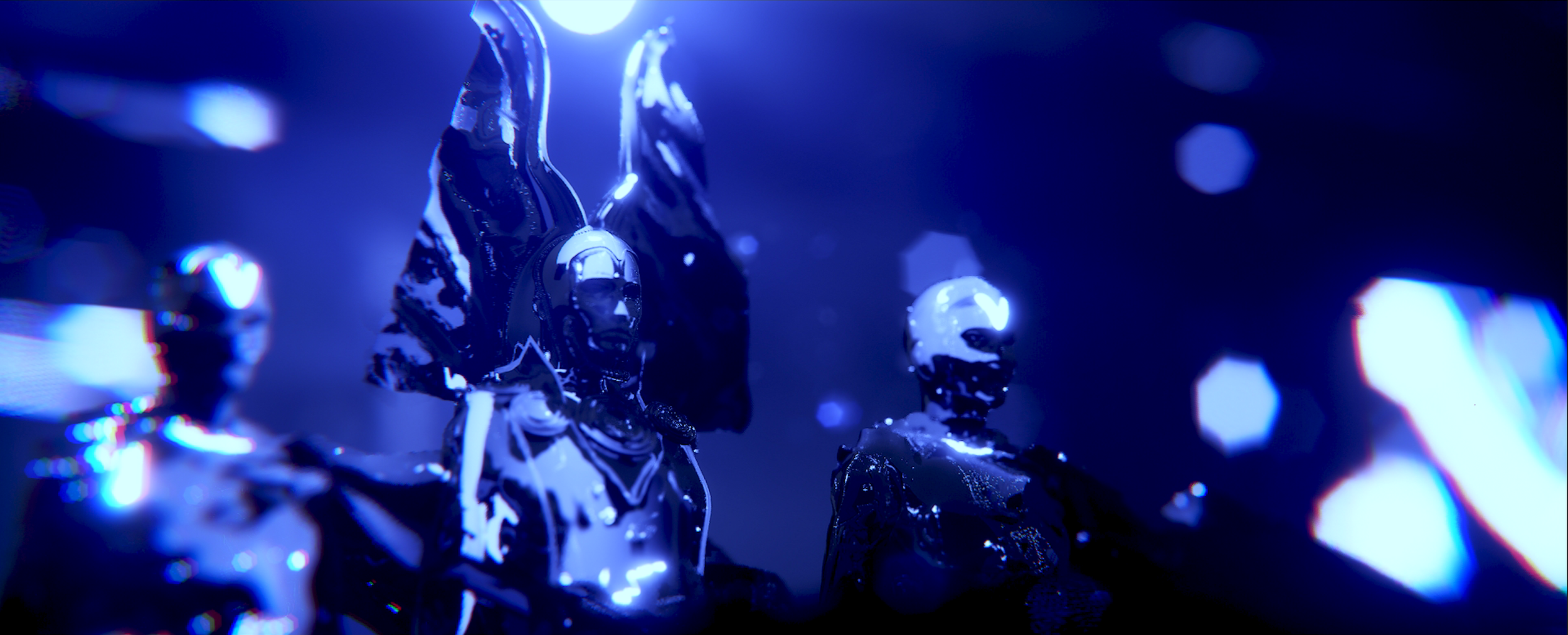
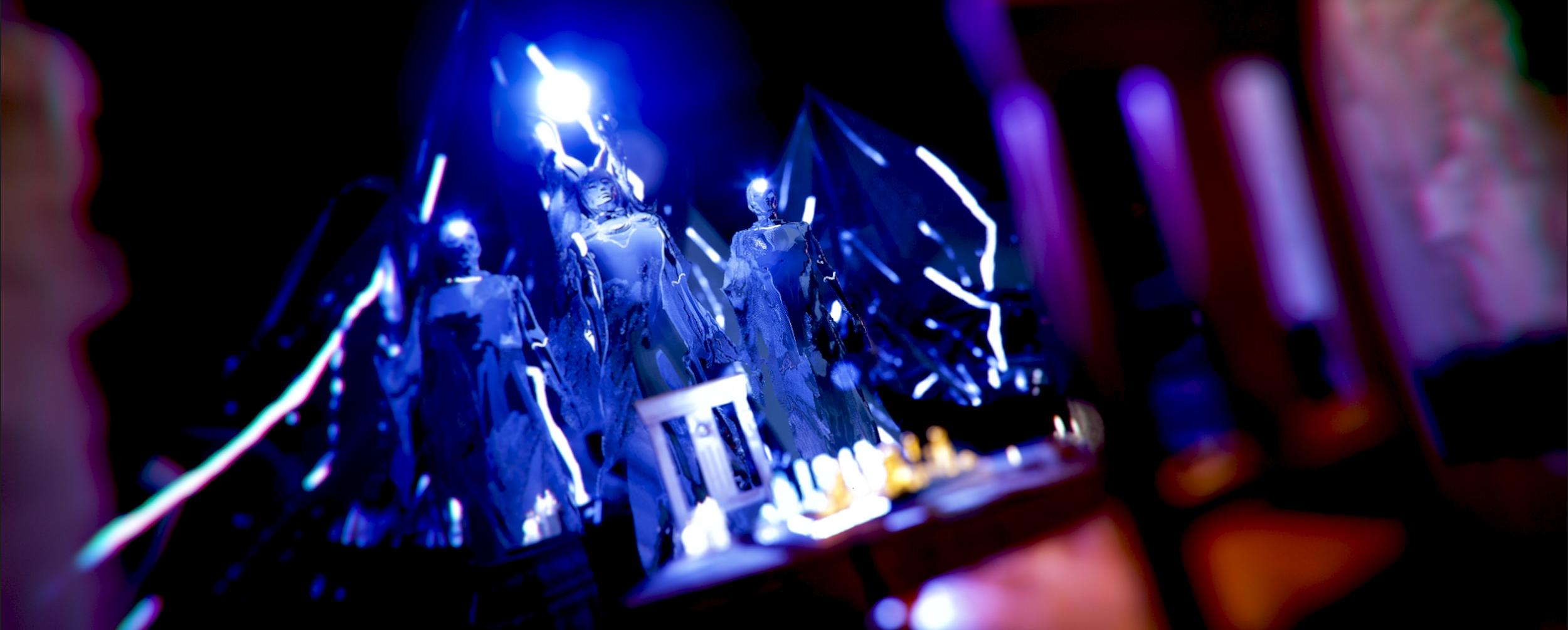
Within this system, color and grading function as a primary narrative tool, developed during the initial storyboard phase. Each group of characters is introduced with a distinct tonal identity: the colonizers are defined by a cold electric blue palette generated through emissive materials embedded within their forms under the shadows of their sails, while the inhabitants are introduced through a warm golden-hour sunset palette.
As the narrative progresses and the inhabitants begin to assimilate, the color system shifts into a sustained tension between warm and cool tones. This duality gradually collapses over the course of the story, and by the climax the warm palette is completely extinguished, leaving only the cold pre-dawn blue state associated with the colonizers.


Character Design
Character design played a critical role in visualizing the themes of adaptation and transformation at the heart of the story. The contrast between the inhabitants and the colonizers is expressed not only through their appearance but through their relationship to the environment, movement, and light.
Indigenous population/ inhabitants
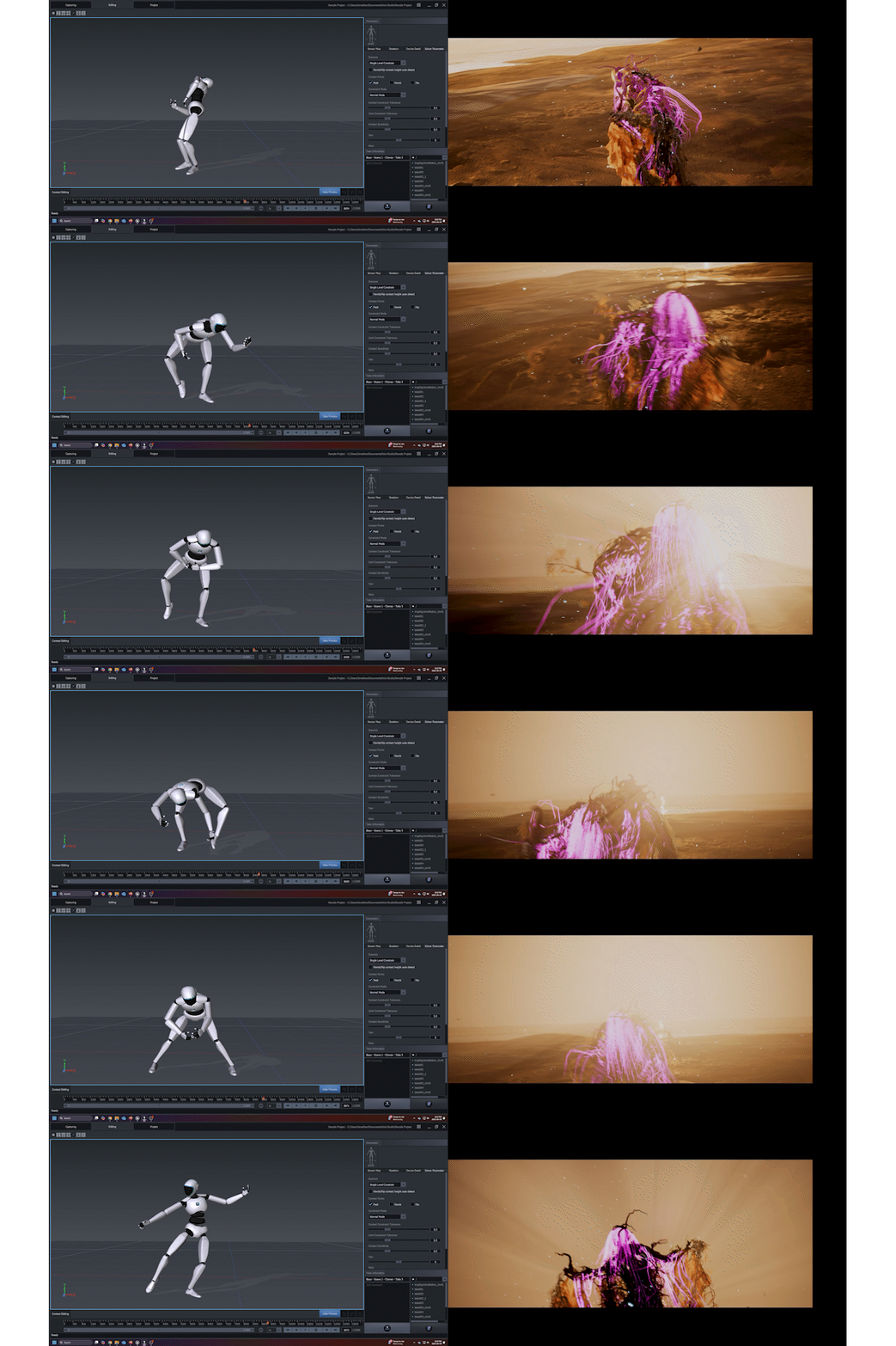
The inhabitants are constructed as cascading sand forms, conceptually and visually linking them to the landscape. Their bodies were created using Niagara particle systems, allowing them to exist as dynamic collections of particles rather than fixed forms. Unreal Engine 5.4 introduced improved particle-lighting capabilities, enabling the sand particles to more convincingly receive and respond to environmental lighting. Their bodies are in a constant state of motion. Sweeping gestures, environmental forces, and fluid animation cause particles to disperse and reform, creating the impression that the inhabitants are continuously shaping and being shaped by the world around them. As the characters transform throughout the narrative, their Niagara particle bodies are progressively shed, revealing the reflective forms beneath and visualizing their assimilation into the colonizers.

Invaders/ Colonizers
In contrast, the colonizers are designed as rigid and reflective figures. Rather than blending into the environment, they distort and mirror the light around them. Their surfaces are cold, metallic, and highly reflective, creating a visual separation between themselves and the landscape they occupy. While the inhabitants are defined by movement and change, the colonizers are characterized by stillness, control, and permanence. The figures are clad in reflective cloth inspired by the sails of colonial ships. Custom emissive materials were developed to both reflect and emit light as the characters move through the environment. These materials generate pronounced light shafts, lens artifacts, and geometric bokeh effects that amplify the characters' presence within the frame. The resulting visual distortions are light structures and artifacts projected into the world around them.

Choreography Model
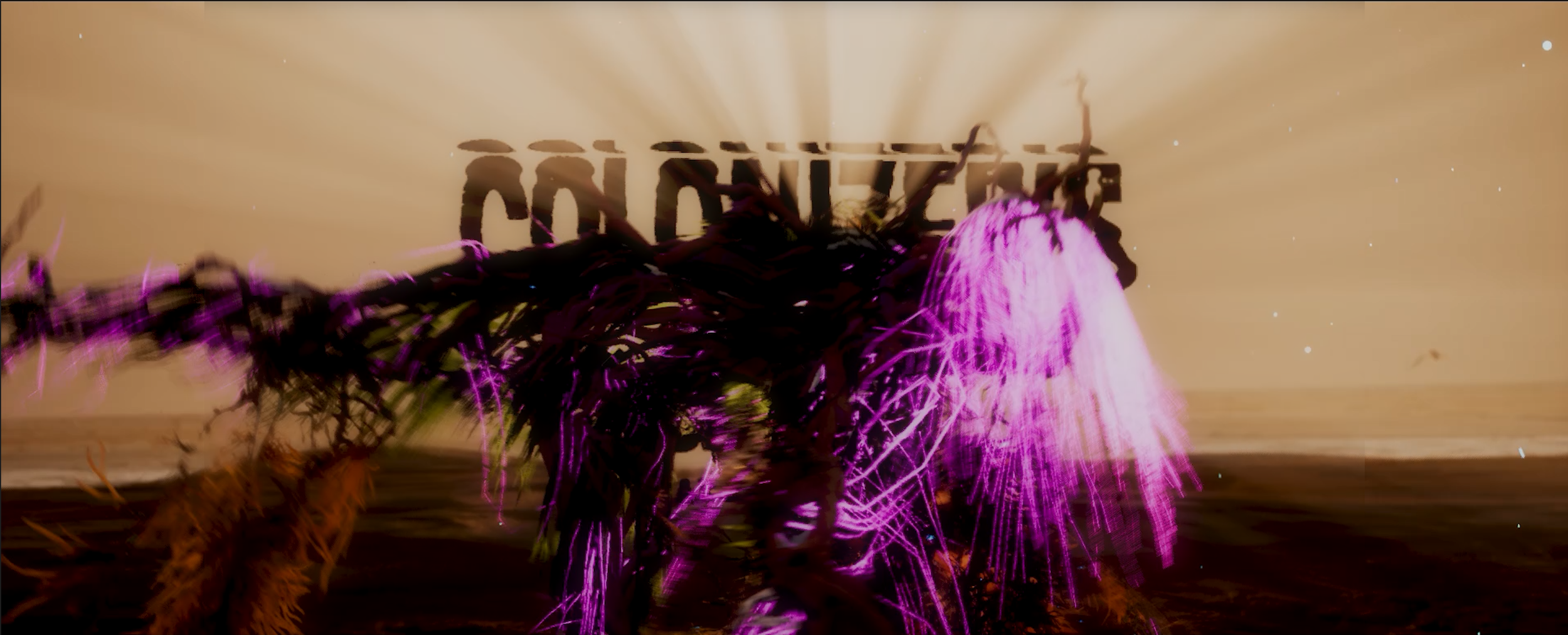
A character model was developed for the introductory choreography performance, based on a design by choreographer Jasmine Laiw (jasmineliaw.com). The model was built in Blender and integrated into Unreal Engine, where groom assets were used to create organic hair and seaweed-like forms. Additional attachments and secondary motion elements were implemented using Chaos Cloth simulations to enhance movement throughout the performance.
Custom materials were created for the character body, seaweed attachments, and groom assets. Subtle particle emitters were integrated throughout the model to add atmosphere and reinforce the ethereal quality of the choreography.


Ships
The ship design was a critical component of the piece, serving as one of two key moments where movement was reintroduced back into the narrative through participant response. The design process focused on evoking the feeling of approaching unfamiliar ships from the perspective of an isolated island community, and how that perception might distort scale, meaning, and presence.
The concept evolved through iterative exploration of sails as both familiar and alien forms, exaggerating and abstracting their structure to reflect how they might be perceived by the inhabitants. The ship was modeled in Blender, while a custom emissive and reflective material shader was developed in Unreal Engine.
Similar to the colonizer characters, the ship uses a deliberately artificial visual language: a reflective surface fractured by cracks and streaks of emitted light. This was designed to generate strong light shafts, lens artifacts, and bokeh responses within the environment, creating a presence that feels visually disruptive, unfamiliar, and out of place within the world.


Motion Capture:
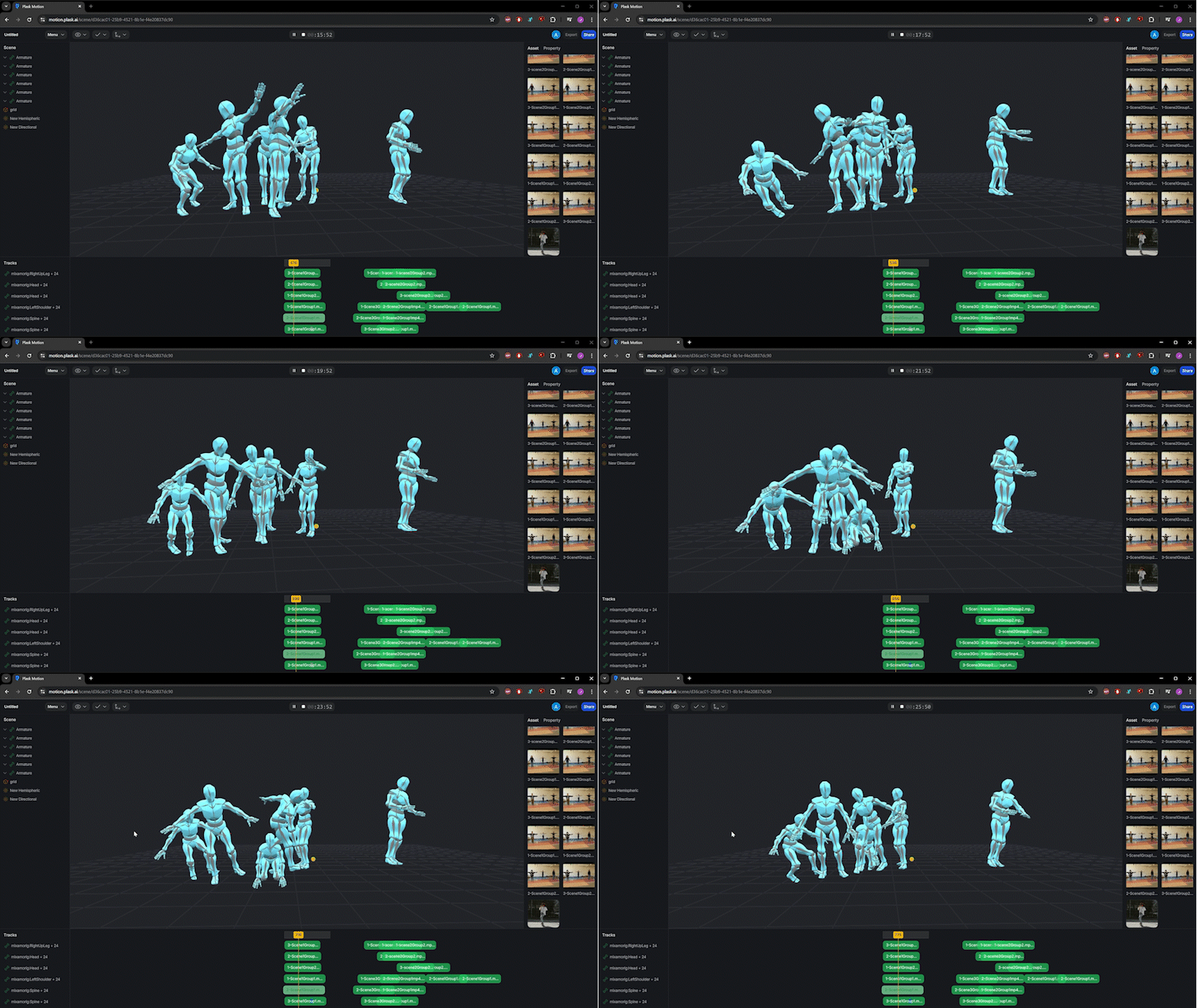
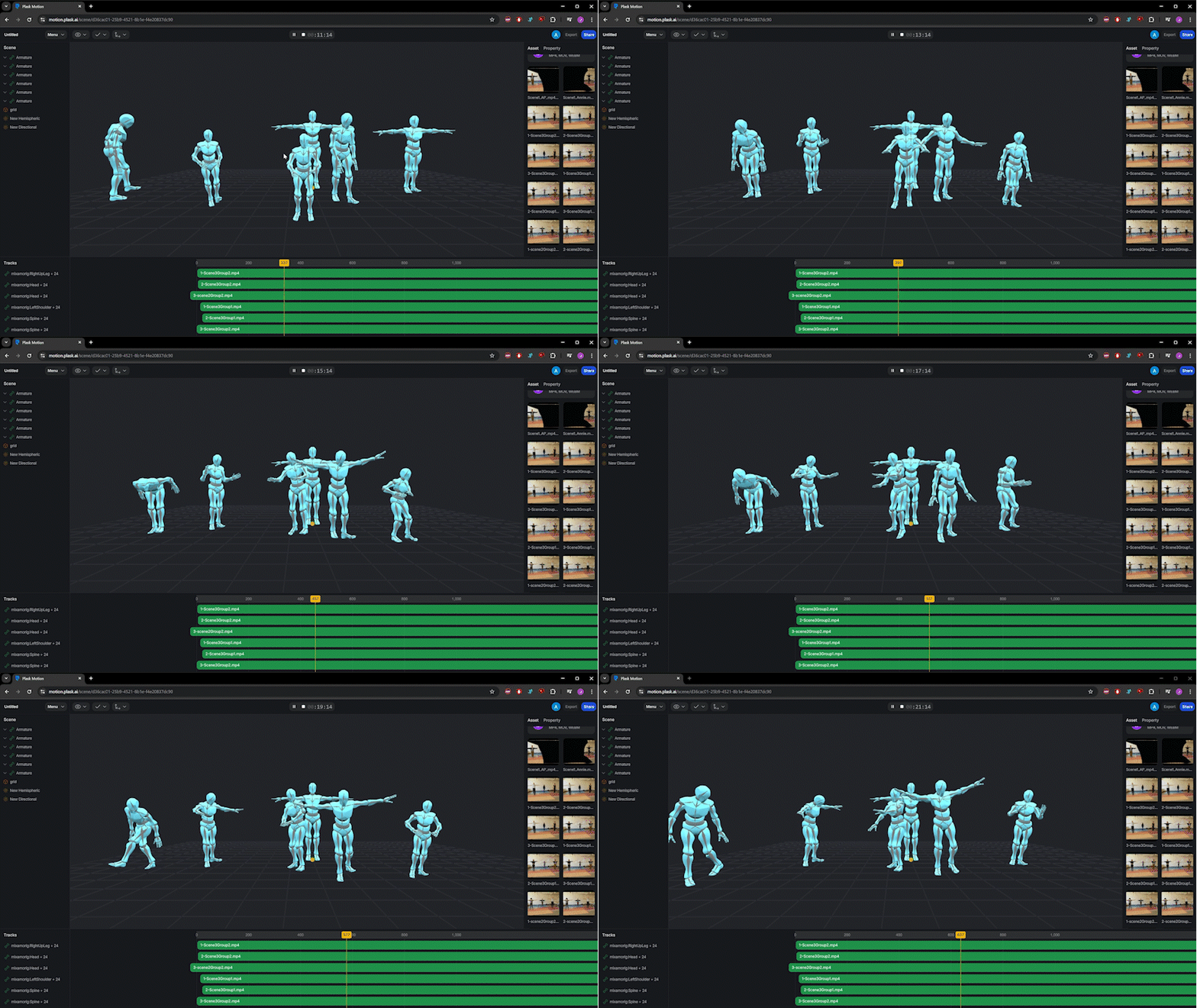
Motion capture was fundamental to the project, serving both as a tool for character animation and as a method of reinscribing participant witnessing back into the work. Character animation for the animated short was captured using an Axis Studio motion capture suit, an inertial-based motion capture system. Participant movement during the workshop was captured using PLASK AI, an AI-based markerless video capture system.



Title Graphic
A title treatment was created using a hybrid analog-digital workflow combining print and scanner-based distortion. A tall, uniform sans-serif typeface was used as the base, then intentionally degraded through scanography to introduce controlled visual displacement and motion artifacts.
This process was used to embed a sense of movement into an otherwise rigid typographic system, referencing water dynamics in the narrative environment, participant movement in the workshop, and the transformation of characters within the story.


